





Choosing the right transport in Southeast Asia isn’t complicated — but it does require knowing what to look for. Traveling through the region should be straightforward, but for many people the hardest part is uncertainty. Will the driver show up? What if the airport transfer runs late and you miss your flight? Who do you call at midnight when something changes?
This guide is based on five years of moving travelers across Cambodia, Thailand, Vietnam, and beyond. Here’s what actually matters when you book.
1. Uncertainty is the biggest stress in travel — and support is the answer
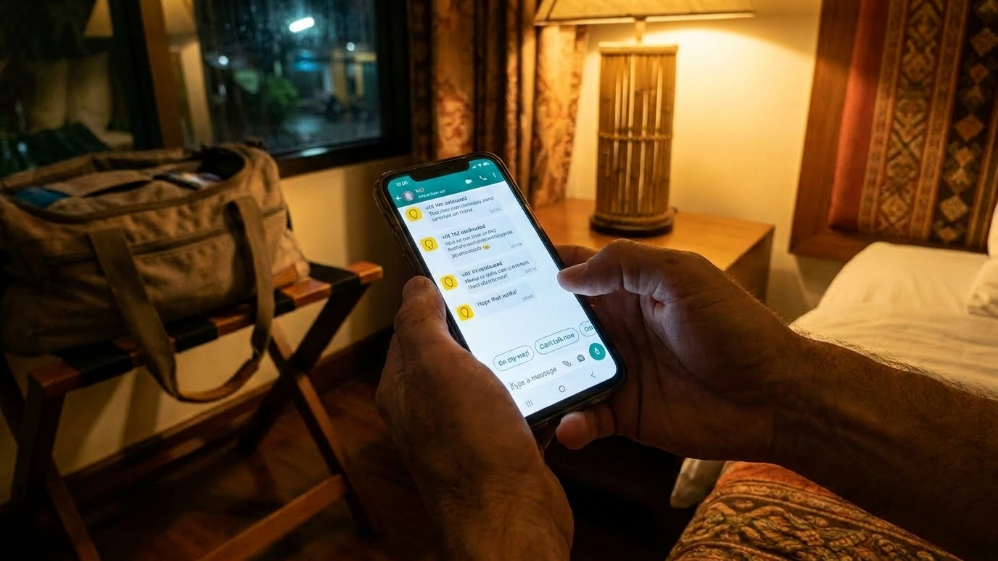
For most travelers, the stress isn’t the journey itself. It’s not having answers when something feels off. These concerns are completely normal — especially for early morning pickups, airport transfers where missing a flight is a real risk, late night arrivals, or long border crossings.
This is where different types of providers vary significantly. Large booking platforms are convenient for reservations, but real-time support is often handled by bots, AI agents, or automated systems that pull up answers from a FAQ rather than addressing your actual situation. Ride-hailing apps like Grab or Uber are fully automated — convenient for short city trips, but there’s no person responsible for your booking and no one to call if something goes wrong. Independent drivers can be very responsive — but not always late at night, or when they’re driving and simply can’t respond.
What gives travelers the most confidence is a combination: a proper booking confirmation by email — so everything is documented — and a real person reachable on WhatsApp for anything that needs an immediate answer. When both exist together, you know your booking is in a system and that someone will actually pick up if something shifts.
Before booking, send a message and see how fast they respond. That first reply tells you a lot.
2. The price difference — what it actually represents

Yes, independent drivers are usually cheaper. The difference between a transport company and a local driver can be 20–30%. That’s real money, and it’s fair to ask what you’re paying for.
Here’s the context worth keeping in mind: for most travelers, a journey to Southeast Asia isn’t an everyday event. People plan and prepare for months to spend two or three weeks traveling through Thailand, Vietnam, or Cambodia. For many, it’s a once-in-a-lifetime destination — they may never come back. There’s no second chance to see it right.
Against that backdrop, a price difference of $10–15 on a transfer looks very different. The question isn’t whether the cheaper option costs less. It’s what happens if it doesn’t show up — and what that costs you in time, money, stress, and experiences you won’t get back.
That said, it’s completely reasonable to wonder whether the higher price reflects real value — or just a middleman taking a cut. Here’s a useful way to think about it:
Large global platforms charge a premium but carry very little personal accountability. If something goes wrong, you’re dealing with a support ticket, not a person who cares about your specific trip.
Independent drivers can be excellent — many are. But there’s no backup if the driver gets sick, the car breaks down, or they simply don’t answer. The quality varies, and there’s no one to escalate to.
A small, well-run operator sits in the middle: structured enough to have a real booking system, invoices, and email confirmations — but small enough that your trip actually matters to them. That combination is what the price difference usually reflects.
3. Problems happen — what matters is how they’re handled

No transport provider gets everything right every time. Traffic, vehicle issues, schedule changes — these happen across the entire industry, at every price point. The goal isn’t to find a company with zero problems. It’s to find one that handles problems well.
The most reliable way to understand this before you book is to read reviews — not just the positive ones. Look specifically at negative reviews and check whether the company responded. Did they acknowledge the problem? Did they offer a solution? How quickly did they react?
A company that responds to complaints honestly and takes responsibility is a stronger signal of reliability than a perfect rating with no difficult situations on record. In travel, how a provider behaves when something goes wrong is the real test.
You can also ask directly. Before booking, message the operator and ask what happens if there’s a delay, a vehicle issue, or a last-minute change. A serious company will have a clear answer. That conversation itself tells you whether there’s a real person behind the booking.
What to Check Before Booking Transportation in Southeast Asia
| Response time | How quickly do they reply to your first message? Is the answer specific or generic? |
| Confirmation process | Do you receive a written confirmation with driver details, pickup time, and a direct contact number? |
| Support channel | Is there a real person reachable on WhatsApp or a direct line, not just an email form? |
| How they handle problems | Read the negative reviews and check the responses. That’s where you see the real character of the company. |
| Accountability | If something goes wrong, is there a person or a company that takes responsibility? |
Southeast Asia is one of the most rewarding regions in the world to travel through. Transportation rarely gets remembered when it goes smoothly — but it’s hard to forget when it doesn’t. The difference usually comes down to one thing: knowing that if something changes, someone is already on it.
